What should I know about Maestro Quartzite?
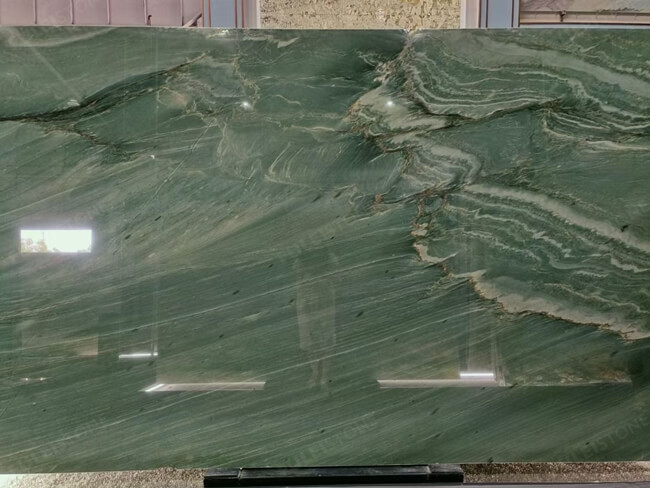
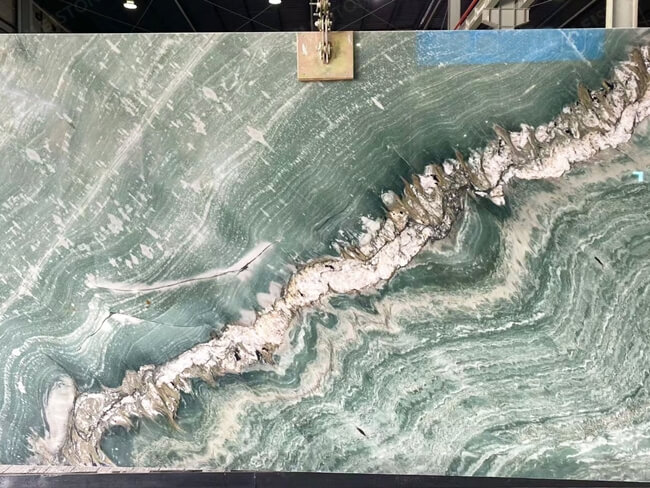
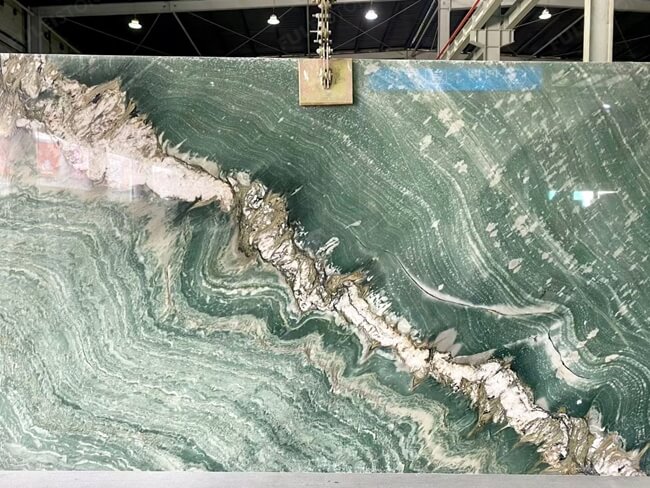
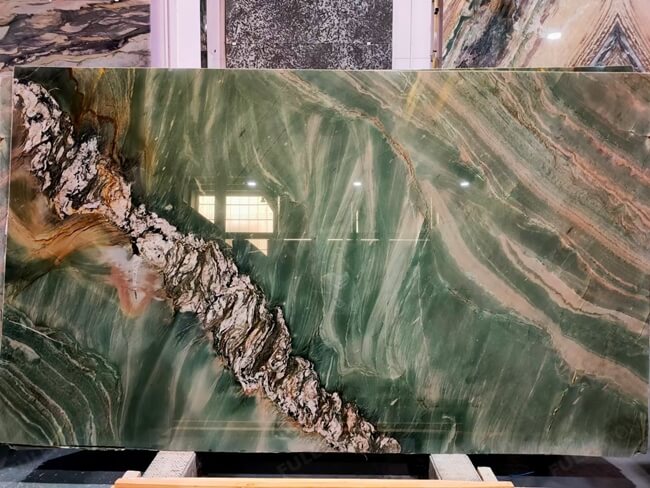
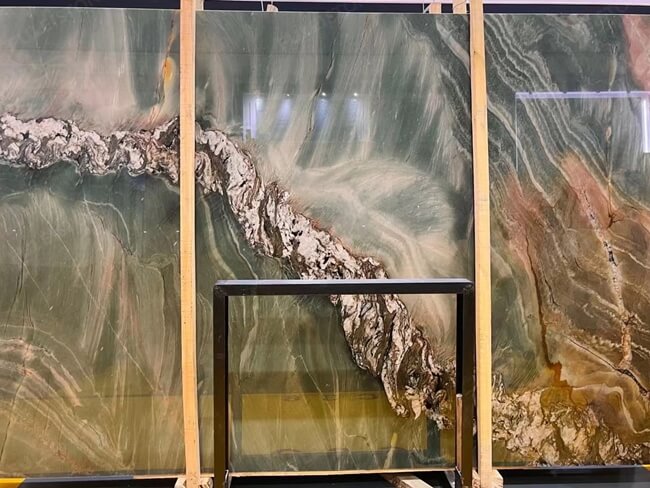
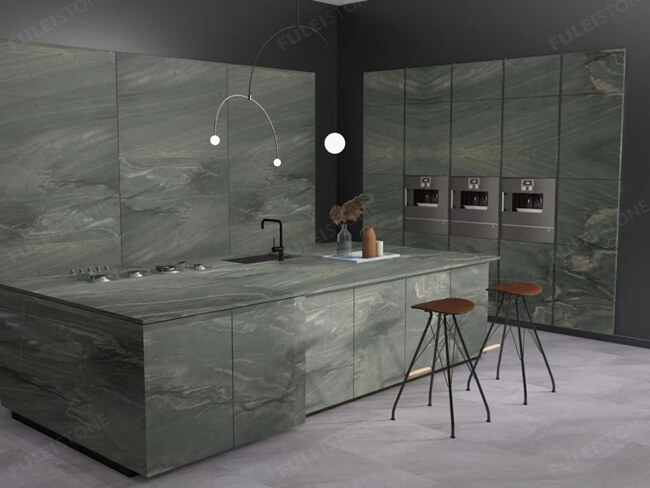
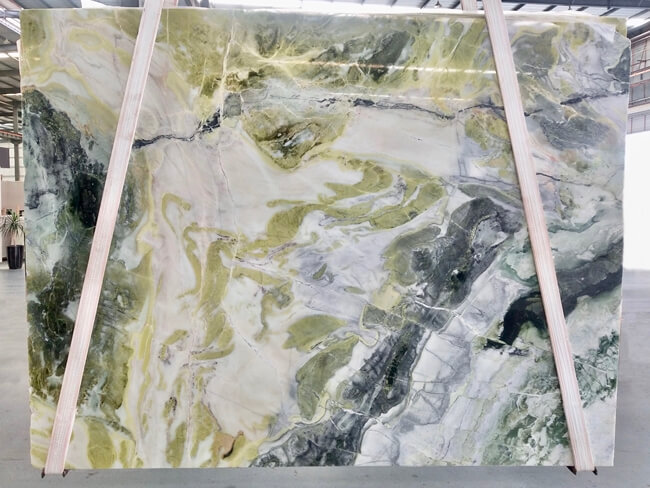
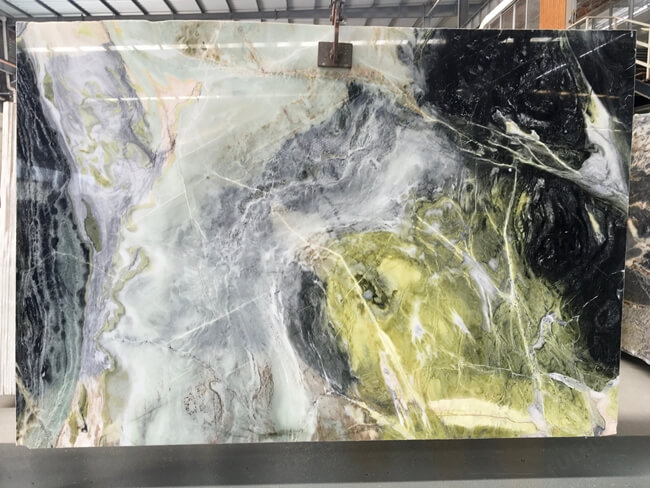
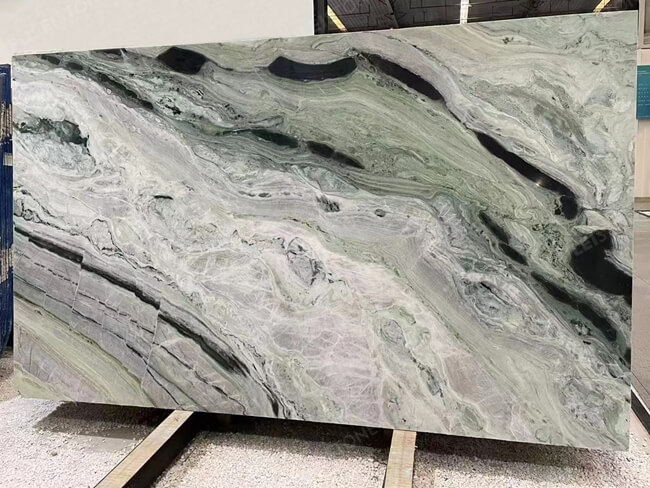
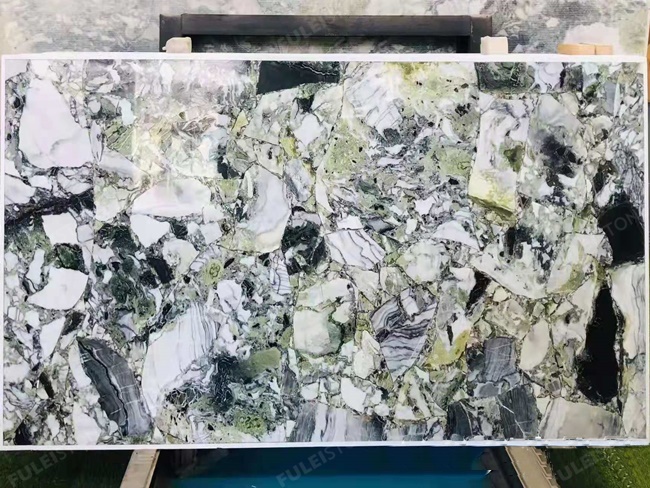
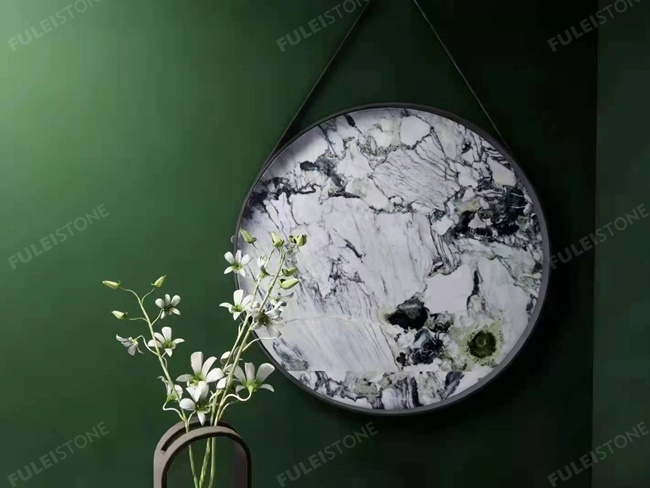
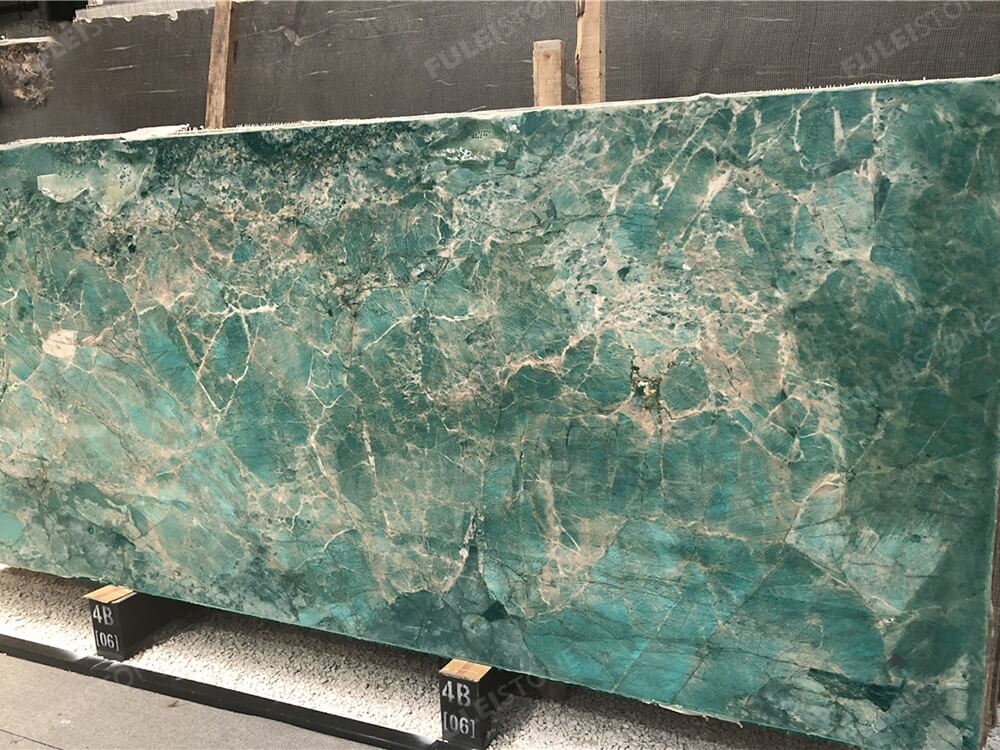
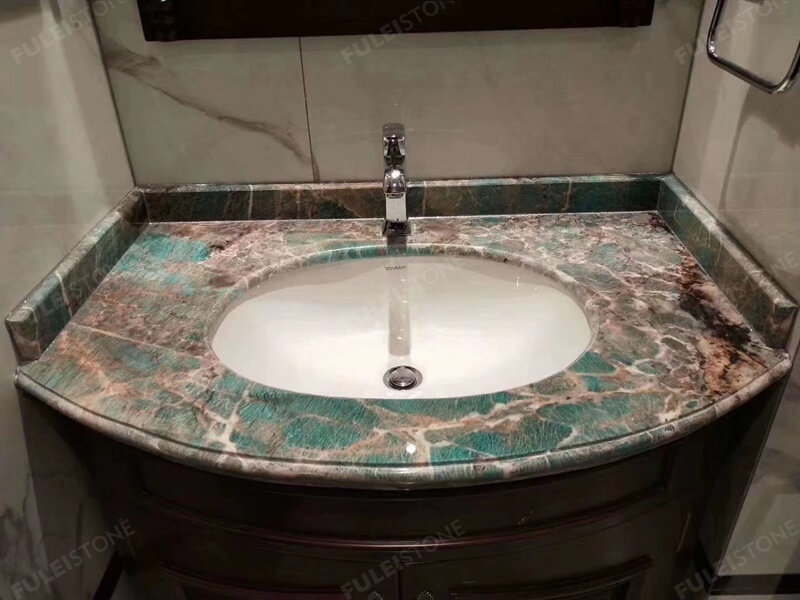
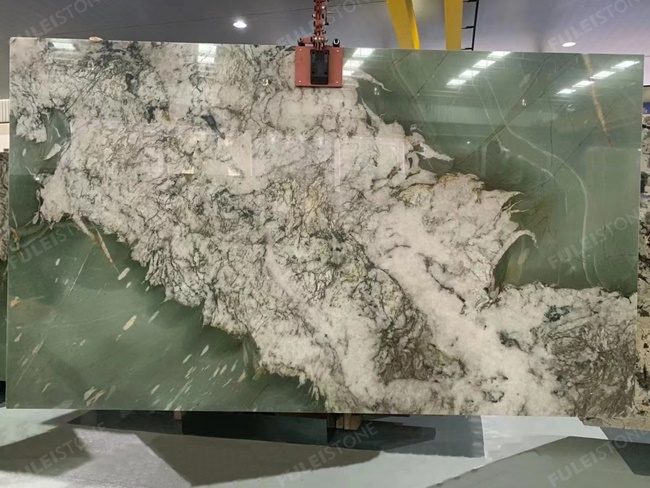
This product is a natural stone sold as quartzite, not resin-bound engineered quartz. Its appearance features light green tones with white, grey and warm golden movement.
What should I focus on when selecting Maestro Quartzite?
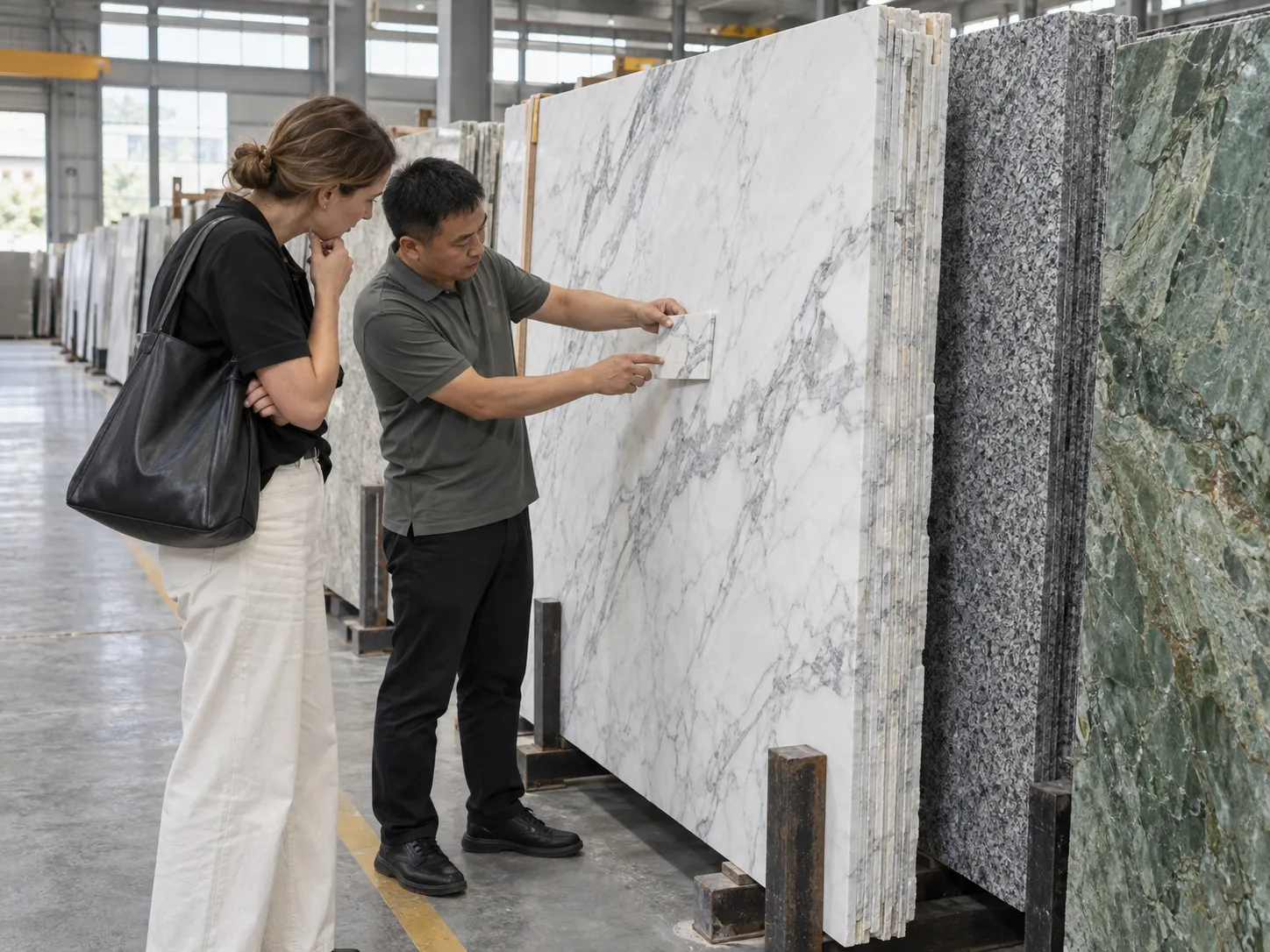
Approve the green background independently of the golden movement and lighter crystal zones. Ask for current material photographs and a representative physical sample before final approval.
What should be approved in a green stone selection?
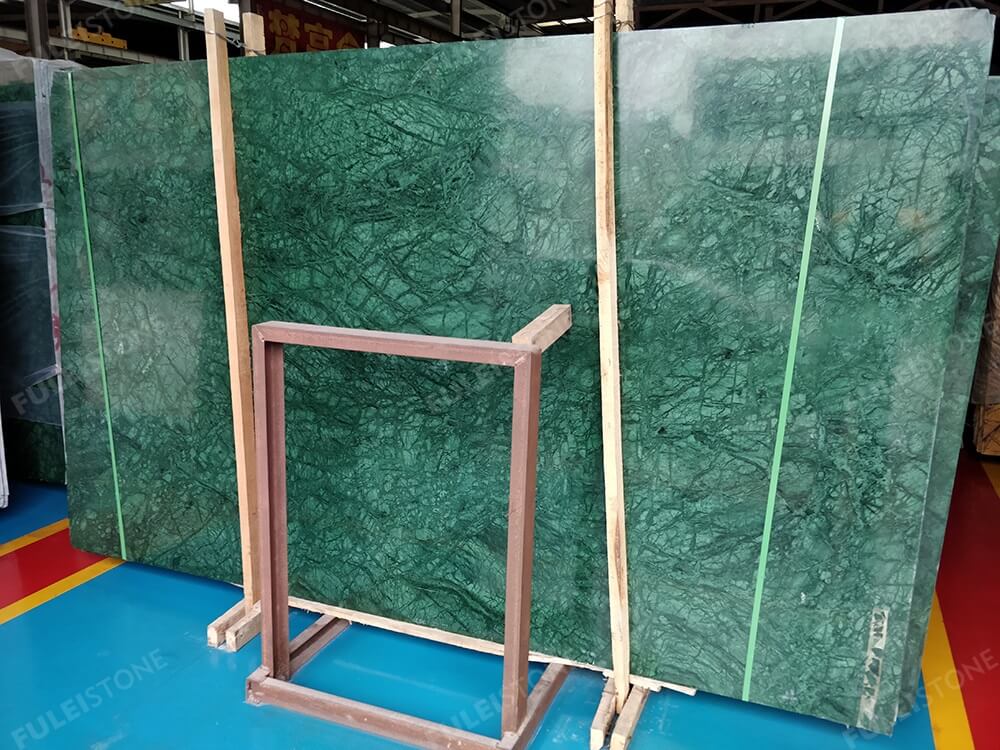
Check the green depth, the amount of pale or dark veining and any warmer mineral patches. Evaluate the chosen finish with the other room materials. For an unusually pale or dark specification, approve a range of actual pieces instead of assuming every slab shares the same green.
Will every part of the slab transmit light?
No uniform result should be assumed. Clearer-looking zones, opaque minerals, thickness, resin and backing can all affect transmission. Check the selected slab with light behind it and approve an assembly sample before ordering a backlit installation.
What belongs in the backlighting mock-up?
Use the proposed stone thickness, support or backing, light source, spacing and surrounding enclosure. Include a joint and a repaired area if present. Check hotspots, shadows, colour change and access for maintenance; a torch held behind a loose sample does not represent the completed installation.
How do you plan the flowing pattern across several pieces?
Start with photographs of the actual slabs and place the finished-piece outlines over them. Match the broad flow first, then the smaller veins. Sink openings, corners and narrow returns should be included before the layout is approved.
Will strong vein matching increase the slab quantity?
It can. A layout that preserves a particular sweep may leave usable offcuts that cannot be used in the visible composition. Ask for both the proposed pattern and its slab yield so appearance and material cost can be reviewed together.
Is this quartzite the same as engineered quartz?
No. Natural quartzite is cut from quarried rock; engineered quartz is manufactured from mineral aggregate and a binder. Trade names alone do not prove the exact composition, so the selected stone should be identified before technical performance is assigned.
Is it a practical choice for a working kitchen?
Yes, natural quartzite is a practical option when the selected slab and fabrication suit the design. Check the slab condition and any resin treatment before cutting. Use cutting boards and trivets, and provide proper support around sink and hob openings.
Can every vein be assumed to resist acidic spills?
Do not make that assumption from the trade name or a photograph. A quartzite-labelled slab can contain other minerals or be misclassified. For a demanding kitchen specification, request reliable stone identification and an appropriate sample assessment, including visibly different areas.
Does quartzite need stain protection?
Some quartzites absorb liquids more readily than others. Assess the selected stone and choose an appropriate impregnating treatment if needed. Such treatment helps limit staining; it does not make the countertop waterproof, prevent every spill mark or correct an unsuitable material classification.
Are slab dimensions and thickness fixed for this product?
No permanent stock size is implied by the trade name. Confirm the current slab list, actual thickness and usable dimensions after trimming or excluding unsuitable areas. For custom block cutting, agree feasibility and quantity before committing to a finished-piece layout.
Can I buy slabs or have the pieces fabricated in China?
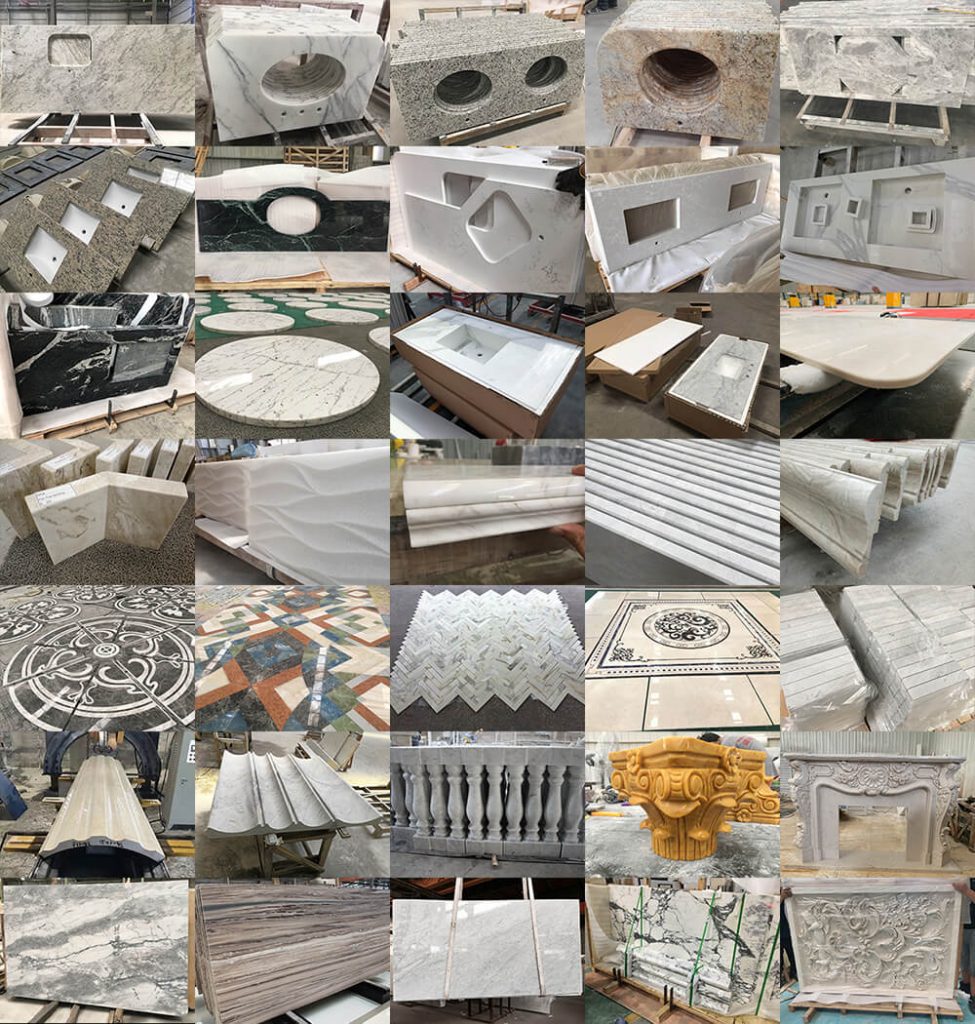
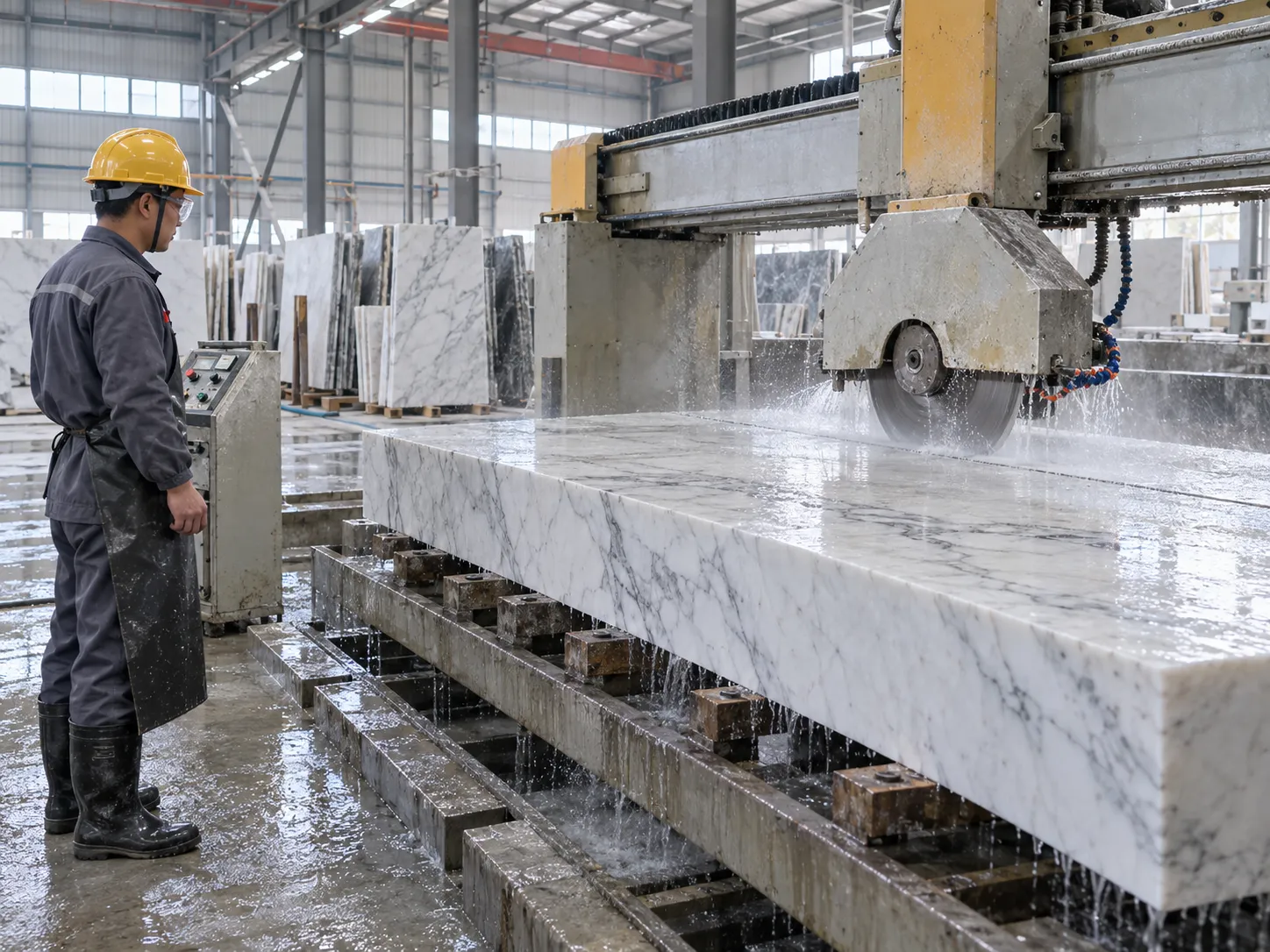
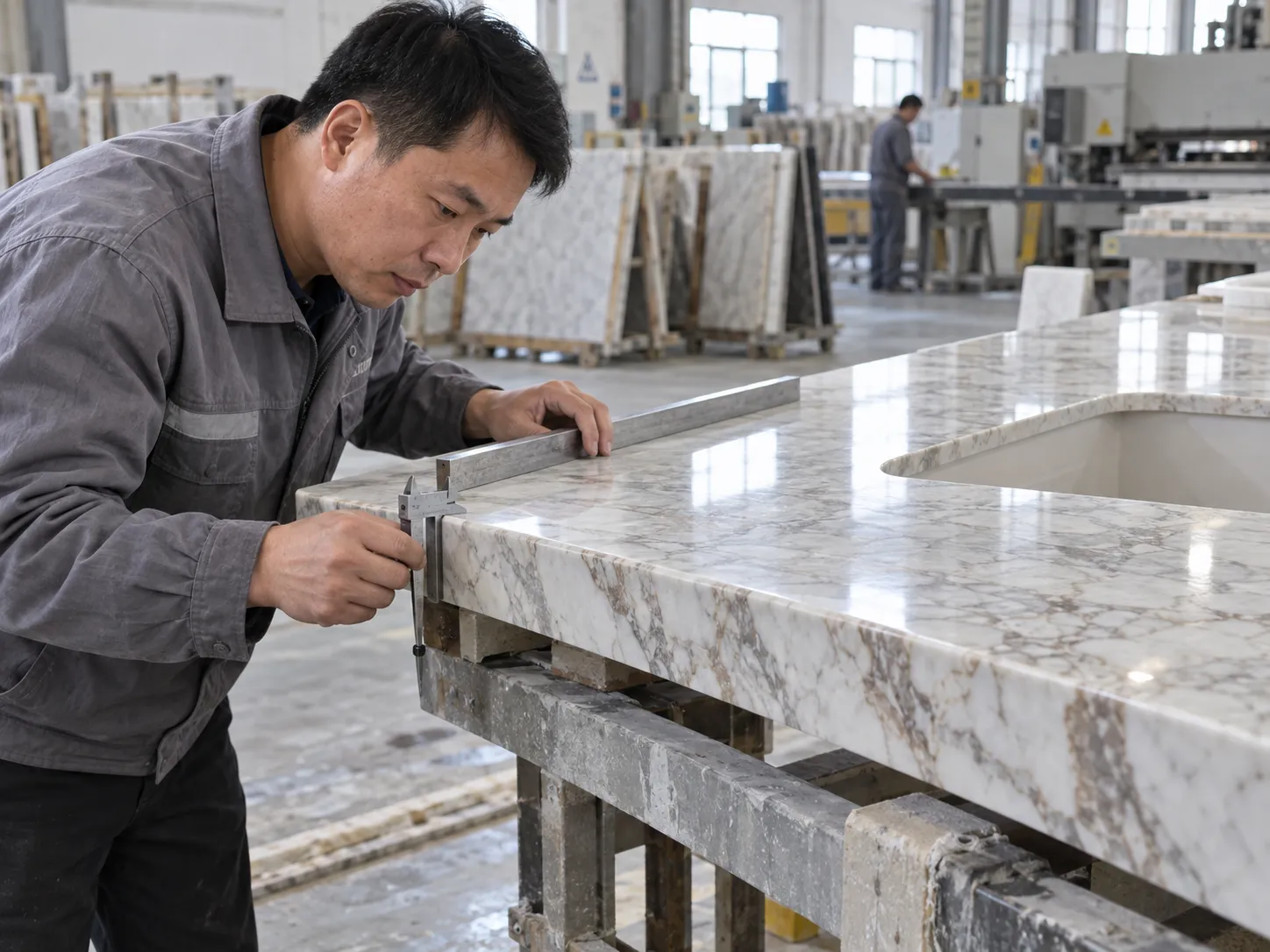
We can quote slabs, cut-to-size pieces and project fabrication based on the approved material and drawings. The scope can include surface finishing, edge processing and layout selection. Confirm which operations and inspection steps are included in the quotation.
Can bookmatched or vein-matched panels be supplied?
They can be considered when the selected slab sequence and cutting direction support the design. A bookmatch requires suitable paired faces; a vein match may use a different arrangement. Approve photographs and a scaled layout before reserving material or authorizing cutting.
Are filled veins or a mesh backing automatically a defect?
Not automatically. Resin filling and reinforcement are used on some natural stones, but the type, extent and visibility should be disclosed and approved. Assess open cracks, loose areas and inadequate repairs separately. Backing compatibility also matters for adhesives, exterior exposure and backlighting.
Should I choose polished, honed or textured stone?
Polished surfaces emphasize colour and reflection; honed surfaces reduce gloss; textured finishes alter touch, shadows and cleaning behaviour. Availability depends on the selected stone and required dimensions. Approve a real finish sample, including an edge, before authorizing the full order.
Can it be specified for floors or exterior walls?
Assess the actual material, finish, exposure and installation system. Floors need suitable slip and wear performance; exterior panels need appropriate weather, fixing and structural assessment. A generic supplier application list is not project-specific approval.
How can I compare quotations fairly?
Compare the same identified material, visual selection, usable yield, thickness, finish and fabrication scope. Include edge work, openings, matching requirements, packing and delivery terms. Ask for these items to be stated clearly so the offers can be compared on the same basis.
What information should I send with an enquiry?
Send the product name or reference, quantity, destination and intended application, plus drawings with dimensions, thickness, finish, edges and openings. Include the preferred slab appearance and any matching or layout requirements. State whether you need slabs or finished pieces.
Which technical values can be included in the specification?
Use documentation identifying the actual supplied material or manufactured product, with the test method, units and sample conditions. Request water absorption, density and bending strength, with other tests selected for the application. A value copied from a similarly named stone or a composite-panel report should not be presented as a universal property of this product.
What affects minimum quantity and production time?
They depend on the selected lot or block, matching requirements, cutting yield, fabrication details and shipping arrangements. We can confirm the proposed quantity and schedule once the material and drawings are agreed. Include your required delivery date with the enquiry.
How are the pieces packed for export?
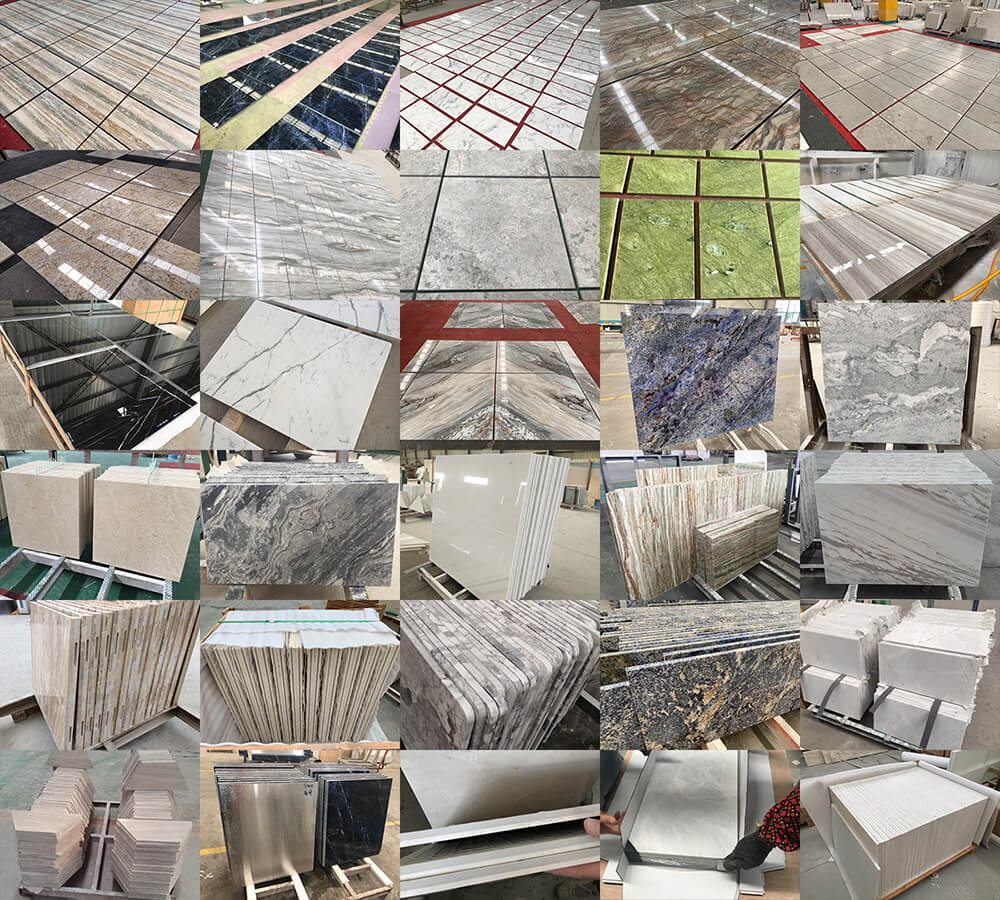
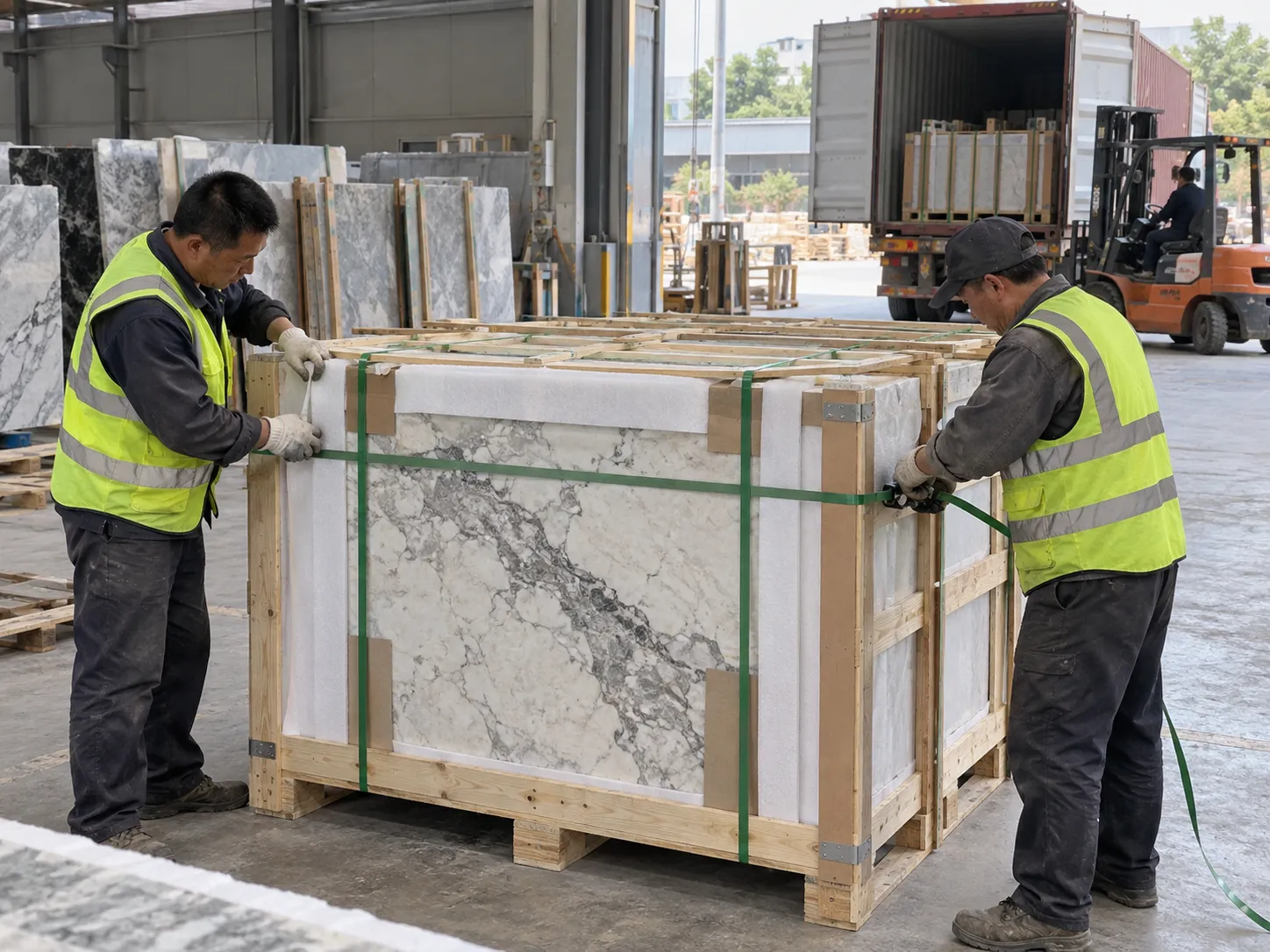
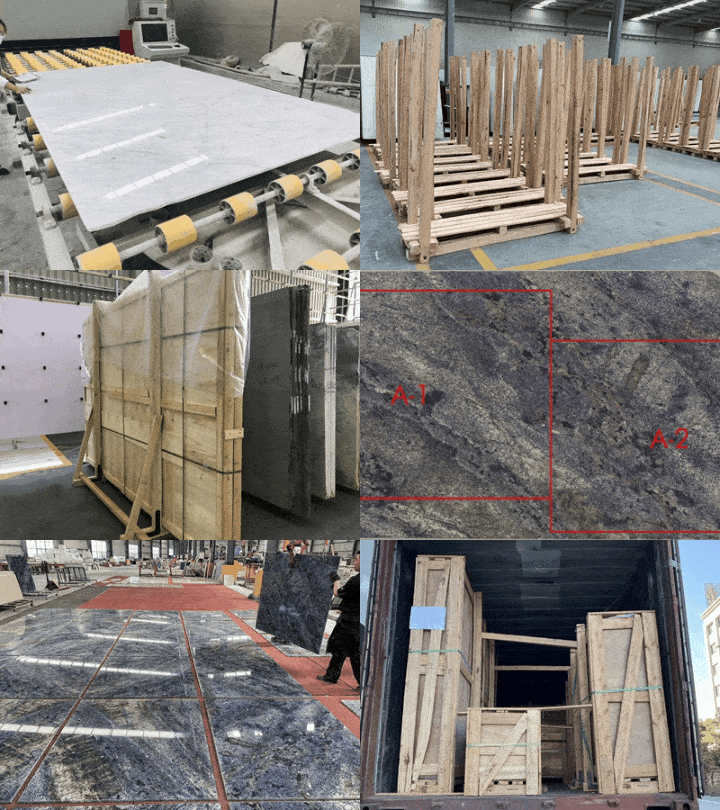
Packing should suit the piece size, weight, finish and fragile details. Protect exposed edges and keep narrow or cutout pieces properly supported. Agree protective separation, crate or rack design, packing labels and inspection photographs. Wood-packaging compliance should be checked for the destination and the actual packing materials.
Can you support shipping to our project destination?
We can coordinate export packing, shipment information and global shipping support within the agreed supply scope. Confirm the delivery term, port or final address, unloading access and responsibility for clearance, duties and local installation before ordering. Freight and transit estimates should be confirmed for the actual shipment.
What is the routine cleaning method?
Use a soft cloth or mop and a cleaner approved for the identified stone and surface treatment. Remove spills promptly, rinse residues and avoid abrasive tools. Do not use acidic descalers or aggressive stain removers without confirming compatibility on the actual material.