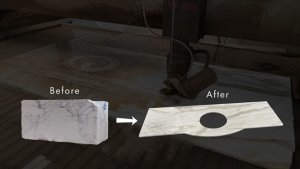
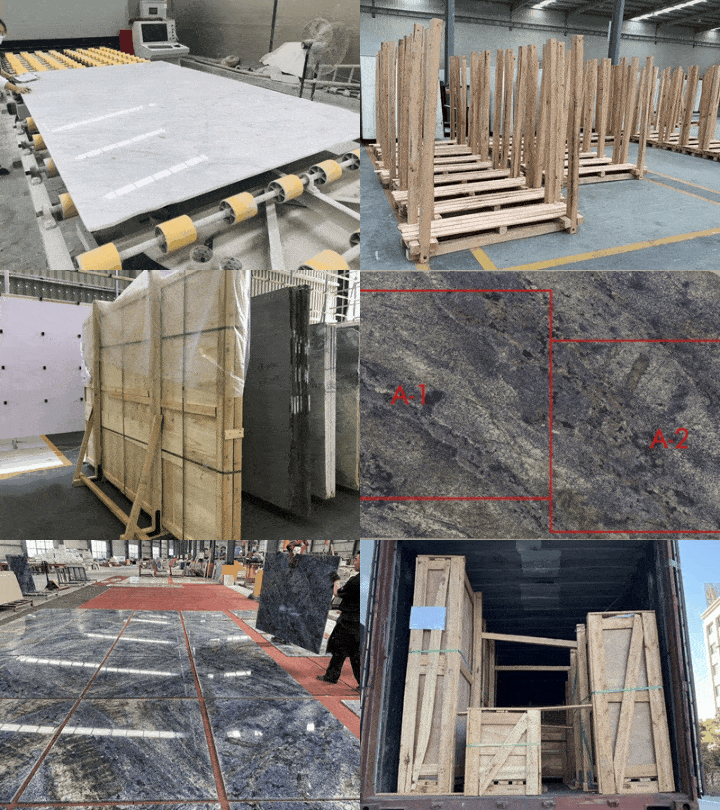
Quick Answer: Crema Marfil Marble is a natural beige marble valued for its warm cream color, subtle veining and ability to coordinate with a wide range of interior materials. It is commonly specified for flooring, wall cladding, bathrooms, vanity tops, stairs, reception areas and custom stone components. For B2B buyers, successful sourcing depends on actual slab approval, color and vein matching, suitable dimensions and thicknesses, controlled fabrication, project labeling, quality inspection and export packing.
What Is Crema Marfil Marble?
Crema Marfil Marble is a natural marble known for its warm beige to creamy background and relatively restrained natural movement. Its neutral color makes it suitable for residential, hospitality and commercial interiors where designers want natural stone without an overly dramatic visual effect.
Unlike manufactured porcelain or engineered materials, every piece of Crema Marfil is naturally formed. Color tone, vein density, mineral markings and visual movement can therefore vary between slabs and production batches.
For project buyers, this natural variation is an important part of material selection. A small sample can help confirm the general color and finish, but large projects should normally be approved using actual slab photographs, videos or physical slab inspection before fabrication begins.
What Does Crema Marfil Marble Look Like?
Warm Beige and Cream Color
Crema Marfil is generally selected for its warm cream and beige appearance. The background can range from lighter creamy tones to deeper beige areas depending on the individual slab and batch.
This color direction works well with wood, bronze, brass, black metal, neutral cabinetry, warm lighting and other natural stones. It is especially useful in projects that require a calm material capable of connecting several rooms or architectural zones.
Natural Veins and Mineral Movement
The surface may contain fine veins, cloudy movement, mineral markings and other natural characteristics. Some slabs appear relatively uniform, while others contain stronger lines or more noticeable variation.
B2B buyers should not assume that all slabs will look identical to a website photograph. When visual consistency is important, the supplier should group compatible slabs and confirm the acceptable color and pattern range before cutting.
Crema Marfil Marble Slabs, Tiles and Finished Products
Crema Marfil can be supplied in different formats depending on the project. The correct format should be selected according to the final application, dimensions, installation method and fabrication requirements.
| Product Format |
Typical Applications |
Main B2B Considerations |
| Marble Slabs |
Wall panels, countertops, stairs, tables and custom fabrication |
Slab dimensions, color range, vein direction, usable area and batch matching |
| Marble Tiles |
Floors, bathrooms, walls, corridors and commercial interiors |
Tile dimensions, thickness, shade consistency, calibration and quantity |
| Cut-to-Size Panels |
Walls, floors, stairs, columns and architectural projects |
Shop drawings, finished dimensions, numbering, joints and installation sequence |
| Vanity Tops |
Hotels, villas, apartments and bathroom projects |
Basin cutouts, faucet holes, backsplash, visible edges and packing |
| Countertops |
Kitchens, bars, reception counters and furniture |
Cutouts, seams, edge profiles, support and maintenance expectations |
| Custom Stone Components |
Stairs, fireplaces, tables, wall details and project furniture |
Drawings, templates, fabrication details, dry layout and individual labeling |
Common Crema Marfil Marble Tile Sizes
Crema Marfil Marble is commonly searched in standard tile dimensions such as 12×12, 16×16, 18×18 and 24×24 inches. However, project requirements vary by market, room layout and installation method.
| Tile Size |
Typical Application Direction |
Project Consideration |
| 12×12 |
Bathrooms, smaller rooms and decorative flooring |
Useful where smaller modules simplify layout around corners and fixtures |
| 16×16 |
Residential floors and general interior areas |
Layout and joint width should be coordinated with room dimensions |
| 18×18 |
Hotels, villas and medium-to-large floor areas |
Batch and shade control become more important across larger quantities |
| 24×24 |
Large open interiors, reception areas and premium flooring |
Larger tiles reduce visible joints but require suitable substrate preparation and handling |
| Custom Cut-to-Size |
Commercial and architectural projects |
Can be fabricated according to approved drawings and project dimensions |
These dimensions should be treated as common market references rather than guaranteed stock sizes. For wholesale and project orders, buyers should confirm current slab availability, required quantity, thickness, finish and cutting schedule before placing an order.
Where Is Crema Marfil Marble Commonly Used?
Crema Marfil Marble Flooring
Flooring is one of the most common applications for Crema Marfil. Its warm neutral appearance can create visual continuity across hotel lobbies, villas, apartment interiors, corridors, reception areas and other large spaces.
For large flooring packages, tile shade and vein movement should be reviewed before production. Pieces can be grouped by area, floor or room to reduce noticeable differences during installation.
Bathrooms and Vanity Areas
Crema Marfil is frequently used for bathroom floors, walls, vanity tops, backsplashes and decorative panels. Its beige color works particularly well in bathrooms that use warm wood, brushed metal, neutral paint or light cabinetry.
Vanity-top fabrication should confirm finished dimensions, basin type, faucet-hole positions, backsplash requirements, edge profiles and visible sides before cutting.
For wet areas, the complete installation system should also consider waterproofing, substrate preparation, suitable adhesives, joints, sealing, drainage and appropriate cleaning products.
Kitchen Countertops
Crema Marfil can be used for kitchen countertops when the client understands the maintenance characteristics of natural marble. Marble can react to acidic substances and may require more care than some harder or less reactive countertop materials.
For kitchen projects, buyers should evaluate lifestyle, maintenance expectations, surface finish and sealing requirements before choosing Crema Marfil for frequently used work surfaces.
Fabrication should also consider sink and cooktop cutouts, narrow stone bridges, seams, overhangs, edge profiles, cabinet support and backsplash dimensions.
Wall Cladding and Feature Walls
The relatively calm appearance of Crema Marfil makes it useful for large wall surfaces where highly dramatic stone could dominate the interior. It can be used for reception walls, lift lobbies, corridors, bathroom walls, fireplace surrounds and residential feature walls.
Large wall projects should be planned using actual slabs. Panel dimensions, joints, slab direction, openings, corners, anchors and installation order should be reviewed before fabrication.
Stairs and Architectural Components
Crema Marfil can also be fabricated into stair treads, risers, skirting, window sills, thresholds and other architectural stone components.
These products require accurate dimensions and clear piece identification. For multi-floor projects, labeling by floor, staircase, area and installation sequence can simplify site handling.
Polished Crema Marfil and Other Surface Finishes
Surface finish changes the visual character and practical behavior of natural marble. The finish should therefore be selected according to design intent, location and maintenance requirements.
| Surface Finish |
Visual Effect |
Typical Application |
| Polished |
Enhances color, depth and natural movement with a reflective surface |
Walls, floors, vanity tops and decorative interiors |
| Honed |
Creates a softer, lower-glare and more architectural appearance |
Bathrooms, modern interiors, walls and selected floors |
| Brushed |
Creates a more textured and less formal surface character |
Selected interior and architectural applications |
| Custom Finish |
Produced according to project design requirements |
Project-specific stone components and special applications |
Finish samples should be approved before mass production when appearance is important. Polishing or honing can change how the beige background, veins and mineral markings are perceived.
How Crema Marfil Marble Varies from Slab to Slab
Natural variation is one of the main differences between Crema Marfil Marble and manufactured stone-look materials. Two slabs from the same material category may still show differences in background tone, vein concentration, mineral markings and overall movement.
For small installations, moderate variation may be easy to distribute. For hotels, villas, commercial projects and repeated bathroom packages, material allocation should be planned before fabrication.
For large B2B orders, buyers should consider:
- Reviewing actual slab photographs or videos before production.
- Confirming an acceptable color and vein range rather than relying on one small sample.
- Grouping compatible slabs for connected areas.
- Planning repeated rooms from suitable batches.
- Checking slab sequence where visual continuity is important.
- Reserving additional compatible material for critical replacement pieces when necessary.
Crema Marfil Marble Price: What Affects Project Cost?
There is no single Crema Marfil Marble price that applies to every project. Wholesale slab prices, tile prices and finished-product prices depend on material selection and production requirements.
Main price factors include:
- Slab, tile or finished-product format.
- Material grade and visual selection requirements.
- Required dimensions and thickness.
- Surface finish.
- Slab yield and cutting loss.
- Quantity and batch requirements.
- Edge processing and custom fabrication.
- Sink, faucet, cooktop or equipment cutouts.
- Dry-layout and vein-matching requirements.
- Export packing method.
- Destination and shipping arrangement.
A price per square foot or square meter can be useful for preliminary comparison, but it may not represent the final cost of a fabricated project. Countertops, stairs, wall panels and custom components should normally be quoted according to drawings and processing requirements.
For an accurate B2B quotation, buyers should provide the required product format, dimensions, thickness, finish, quantity, application and destination.
Natural Crema Marfil Marble vs Crema Marfil-Look Porcelain
Searches for Crema Marfil often include porcelain and ceramic products designed to reproduce a similar beige appearance. These materials should not be confused with natural Crema Marfil Marble.
| Comparison |
Natural Crema Marfil Marble |
Crema Marfil-Look Porcelain |
| Material |
Natural stone |
Manufactured ceramic material |
| Pattern |
Each slab and tile has natural variation |
Pattern is digitally controlled and may repeat |
| Visual Character |
Natural depth, mineral movement and individual variation |
More standardized and predictable appearance |
| Fabrication |
Can be cut and fabricated into many custom architectural components |
Fabrication depends on product format and manufacturing system |
| Maintenance |
Requires appropriate natural-stone care |
Generally designed for easier routine maintenance |
| Project Positioning |
Suitable when genuine natural stone is part of the design intent |
Suitable where standardized appearance and practical maintenance are priorities |
The better choice depends on the design brief, budget, maintenance expectations and whether genuine natural material is important to the project.
Crema Marfil Marble vs Engineered Quartz
Crema Marfil Marble and engineered quartz may both be considered for beige interior surfaces, but they are fundamentally different materials.
Crema Marfil is a natural stone with individual variation between slabs. Engineered quartz is manufactured to provide greater consistency in color and pattern. Buyers should therefore decide whether natural variation or standardized appearance is more important to the project.
For large architectural projects, Crema Marfil offers additional possibilities for flooring, wall panels, stairs, large slabs and custom natural-stone fabrication beyond standard countertop applications.
Crema Marfil Marble and Other Beige Marbles
Crema Marfil is not the only beige marble available for international projects. Other warm beige, cream and light-colored marbles may offer different vein structures, background tones and price directions.
For B2B procurement, material selection should not be based only on product names. Buyers should compare actual slabs, color range, available dimensions, required quantity, application and project schedule before making the final decision.
When an exact visual match is unavailable, a supplier can also help evaluate alternative natural stones with a similar warm beige design direction.
What B2B Buyers Should Check Before Ordering Crema Marfil
1. Confirm the Actual Material
Review current slab photographs, videos or physical samples instead of relying only on catalogue images. Confirm the acceptable beige tone, vein range and natural characteristics.
2. Confirm Quantity and Batch Requirements
Large projects should identify which areas need close color consistency and which areas can accept broader natural variation. Connected floors, repeated bathrooms and large walls may require planned material allocation.
3. Confirm Dimensions and Thickness
Provide finished tile sizes, panel sizes, countertop dimensions, stair details or slab requirements. Thickness should be selected according to the product and application rather than assumed from one standard specification.
4. Confirm Surface Finish
Specify polished, honed or another required finish before production. When a project has strict appearance requirements, approve a finish sample first.
5. Provide Fabrication Drawings
Countertops, vanities, stairs, walls and custom components should be fabricated from confirmed drawings showing dimensions, cutouts, edges, joints, visible surfaces and piece quantities.
6. Review Cutting and Layout
For visually important applications, finished pieces can be planned against actual slabs before cutting. This helps manage vein direction, joint position and the use of stronger or quieter stone areas.
7. Confirm Quality Control Requirements
Inspection can include material selection, dimensions, thickness, surface finish, edge quality, cutouts, piece quantities, labels and final packing.
8. Confirm Packing and Installation Sequence
Finished pieces should be packed according to their shape and risk level. Large projects benefit from labeling by building, floor, room, elevation or installation sequence.
Common Crema Marfil Project Mistakes
| Common Mistake |
Possible Result |
Recommended Prevention |
| Approving only a small sample |
Delivered slabs may show more variation than expected |
Review actual slabs and define an acceptable color and vein range |
| Mixing unrelated batches in connected areas |
Floors or walls may show noticeable shade differences |
Plan material allocation before fabrication |
| Starting production before drawings are final |
Cutouts, joints or dimensions may require costly changes |
Approve final shop drawings before cutting |
| Ignoring vein direction |
Finished walls, stairs or countertops may appear visually disconnected |
Review slab and piece orientation before production |
| Ordering exact quantities without considering replacement material |
Future replacement pieces may be difficult to match |
Consider compatible spare material for critical project areas |
| Packing without room or installation identification |
Site teams spend additional time sorting pieces |
Use clear piece, room and crate labeling |
How a China Stone Factory Supports Crema Marfil Projects
A China-based natural stone fabrication factory can combine material sourcing, project processing and export coordination into one workflow. This is especially useful when a buyer requires more than standard slabs or tiles.
Typical project support can include:
- Natural stone sourcing and slab selection.
- Full-slab photograph and video confirmation.
- Color and vein matching.
- Slab and tile supply.
- Custom cut-to-size production.
- Countertop and vanity-top fabrication.
- Wall panel and stair fabrication.
- Surface finishing and edge processing.
- CAD and shop-drawing review.
- Cutout and miter processing.
- Dry layout for important project areas.
- Piece numbering and area-based labeling.
- Dimensional and visual quality inspection.
- Reinforced export packing.
- Container loading and international shipping coordination.
The objective is not simply to cut Crema Marfil into smaller pieces. A B2B stone project requires coordination between the approved material, drawings, fabrication details, visual layout, quality control, packing and final installation sequence.
Crema Marfil Marble Project Workflow
| Project Stage |
Main Work |
Buyer Confirmation |
| Material Selection |
Review slabs, colors, veins and available quantities |
Approve material range |
| Specification Review |
Confirm sizes, thickness, finishes and quantities |
Approve product specifications |
| Drawing Review |
Check dimensions, seams, cutouts, edges and visible faces |
Approve final drawings |
| Slab Layout |
Plan finished pieces on selected slabs where required |
Approve important visual layouts |
| Fabrication |
Cutting, polishing, edge processing, drilling and custom work |
Progress confirmation when required |
| Quality Control |
Check dimensions, appearance, edges, surfaces and quantities |
Review inspection photos or reports |
| Packing |
Protect and label finished products according to project areas |
Confirm packing and crate list |
| Shipment |
Container loading and export coordination |
Confirm shipping schedule and documents |
How to Request a Crema Marfil Marble Quotation
A complete inquiry allows the factory to evaluate material usage, fabrication requirements and packing more accurately.
For a project quotation, buyers should provide:
- Required product type.
- Dimensions and thickness.
- Surface finish.
- Required quantity.
- Project application.
- Drawings or size schedules if available.
- Cutout and edge requirements.
- Required color or vein direction.
- Project destination.
- Required delivery schedule.
For projects that are still at the design stage, reference images, floor plans or preliminary drawings can also help the factory recommend suitable slab allocation and fabrication options.
FAQ About Crema Marfil Marble
Is Crema Marfil a real natural marble?
Yes. Crema Marfil is a natural marble, so its color, veins and mineral characteristics vary naturally between slabs. Buyers should review actual materials when consistency is important for a large project.
What color is Crema Marfil Marble?
Crema Marfil is generally characterized by a warm cream to beige background with natural veins and mineral movement. The exact tone and pattern can vary from slab to slab and between material batches.
What sizes are available for Crema Marfil Marble tiles?
Common market searches include 12×12, 16×16, 18×18 and 24×24 inch tiles. Custom metric and imperial dimensions can also be fabricated according to project requirements, subject to slab availability and production specifications.
Is Crema Marfil Marble suitable for bathrooms?
Crema Marfil is widely used for bathroom floors, walls, vanity tops and decorative panels. Wet-area applications should use an appropriate waterproofing, adhesive, joint, sealing and maintenance system.
Can Crema Marfil be used for kitchen countertops?
Yes, but buyers should understand that Crema Marfil is natural marble and requires appropriate care. Acidic substances can affect marble surfaces, so maintenance expectations, finish, sealing and application conditions should be reviewed before specification.
Does Crema Marfil Marble vary from slab to slab?
Yes. Variation in beige tone, veins, mineral markings and overall movement is normal for natural marble. For large projects, actual slab approval and batch planning are recommended before fabrication.
What surface finishes are available for Crema Marfil Marble?
Polished and honed are common interior finishes, while other finishes can be evaluated according to project requirements and fabrication capability. Finish approval is recommended when color and surface appearance are important.
Can Crema Marfil Marble be customized according to drawings?
Yes. Crema Marfil can be fabricated into tiles, wall panels, vanity tops, countertops, stairs, skirting, thresholds and other custom components according to approved dimensions and shop drawings.
Can buyers select actual Crema Marfil slabs before production?
For projects where appearance and batch consistency are important, actual slab photographs, videos or physical inspection can be used for material approval before cutting begins.
How is Crema Marfil packed for international shipment?
Packing should be selected according to the finished product. Tiles, slabs, countertops, wall panels and custom stone components require different protection methods. Reinforced export crates, edge protection, piece labeling and clear packing lists help reduce handling risks during international transport.
Final Recommendation for B2B Buyers
Crema Marfil Marble remains a practical natural-stone option for projects that require a warm beige palette, broad application flexibility and a refined architectural appearance.
For wholesale and project purchasing, the key is not simply choosing a product name. Buyers should confirm actual slabs, color range, quantities, dimensions, finishes, fabrication drawings, vein direction, quality requirements, packaging and delivery conditions before production.
When these details are coordinated early, Crema Marfil can be supplied as slabs, tiles, cut-to-size panels, vanity tops, countertops, stairs and other custom components within one organized project workflow.
For an accurate quotation, send your required sizes, thickness, finish, quantity, drawings and destination so the material selection and fabrication plan can be reviewed before production.